𝐓𝐡𝐢𝐬 𝐢𝐬 𝐚 𝐩𝐨𝐥𝐢𝐜𝐲 𝐭𝐡𝐚𝐭 𝐡𝐚𝐬 𝐧𝐨𝐭𝐡𝐢𝐧𝐠 𝐭𝐨 𝐝𝐨 𝐰𝐢𝐭𝐡 𝐭𝐫𝐚𝐝𝐞
𝐶ℎ𝑟𝑖𝑠 𝑀𝑢𝑟𝑝ℎ𝑦 𝑇ℎ𝑒 𝑤𝑟𝑖𝑡𝑒𝑟 𝑖𝑠 𝑡ℎ𝑒 𝑗𝑢𝑛𝑖𝑜𝑟 𝑈𝑆 𝑠𝑒𝑛𝑎𝑡𝑜𝑟 𝑓𝑜𝑟 𝐶𝑜𝑛𝑛𝑒𝑐𝑡𝑖𝑐𝑢𝑡
Economists and pundits have spent the last two weeks frantically trying to decode what President Donald Trump’s ultimate aim is with tariffs. Last week’s spectacular flip-flop, in which he paused the majority of them for 90 days, came after the White House had spent days insisting the tariffs were not up for negotiation but were instead a longterm strategy to help revitalise the US industrial base and bring back jobs. However, there is a simple reason Trump’s shortlived tariffs make little economic sense: they are not designed as economic policy but as a means to compel loyalty to the president.
The Financial Times (GIFT LINK)
https://ft.pressreader.com/article/281814289706841
@teemo
A Tale of Two Dragons
There once was a dragon named Fafnir. You may have heard of him. He was long on gold, and his idea of investing in the community was to breathe fire on it. One day someone got lucky with a ballista and that was the end of Fafnir. The ensuing war over his hoard is a story for another day.
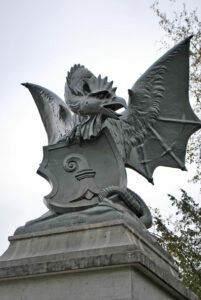
There was another dragon, a baby basilisk, hatched by a lizard from a rooster's egg. It gaze was turning people to stone. Poor thing didn't even know it was a basilisk, it was just looking for its mommy. A milkmaid came along, having polished her pail to a shiny mirror finish, and reflected the basilisk gaze back at the basilisk. That didn't actually kill it, but it caused it to realize what its gaze was doing. They came to an arrangement. The basilisk grew up to become the protector and emblem of the city of Basel. Nobody has attacked the city (or indeed the country) in over 500 years. Is it any wonder that this dragon is revered and its likeness can be found all over the city?
𝐇𝐨𝐰 𝐒𝐨𝐮𝐭𝐡 𝐀𝐟𝐫𝐢𝐜𝐚’𝐬 𝐚𝐩𝐚𝐫𝐭𝐡𝐞𝐢𝐝 𝐬𝐡𝐚𝐩𝐞𝐝 𝐭𝐡𝐞 𝐌𝐚𝐠𝐚 𝐦𝐢𝐧𝐝𝐬𝐞𝐭
𝖲𝗂𝗆𝗈𝗇 𝖪𝗎𝗉𝖾𝗋 𝖥𝗂𝗇𝖺𝗇𝖼𝗂𝖺𝗅 𝖳𝗂𝗆𝖾𝗌
Elon Musk lived in apartheid South Africa until he was 17. David Sacks, the venture capitalist who has become a fundraiser for Donald Trump and a troll of Ukraine, left aged five, and grew up in a South African diaspora family in Tennessee. Peter Thiel spent years of childhood in South Africa and Namibia, where his father was involved in uranium mining as part of the apartheid regime’s clandestine drive to acquire nuclear weapons. And Paul Furber, an obscure South African software developer and tech journalist living near Johannesburg, has been identified by two teams of forensic linguists as the originator of the QAnon conspiracy, which helped shape Trump’s Maga movement. (Furber denies being “Q”.)
(GIFT LINK)
https://ft.pressreader.com/article/282355455139348
@eff@mastodon.social
@Piousunyn@universeodon.com Oligarchs seem to die a lot in Russia.
Martin Wolf, Financial Times:
...The question arises: are the oligarchs who are trying to make Trump president and JD Vance vice-president, the latter a man who has declared he would not have certified that election, about to learn what it means to have a tyrant as president? Yes, someone who attempts a coup against the electoral process — the very heart of democracy — is a would-be tyrant. So is someone who may fill his government with people personally loyal to him. Nobody then can truly be safe, except loyalists and sycophants....
The plutocrats who support Trump may remain safer than Berezovsky. But can they really be as free as they want? Yes, a further erosion of democracy might protect them from interference by the elected politicians they detest. But the men they put in power, in their stead, have a tendency to turn themselves into absolute rulers. Nobody can then be truly safe.
https://ft.pressreader.com/article/281814289130125
𝐓𝐫𝐮𝐦𝐩 𝐢𝐬 𝐡𝐚𝐥𝐟𝐰𝐚𝐲 𝐭𝐨 𝐦𝐚𝐤𝐢𝐧𝐠 𝐀𝐦𝐞𝐫𝐢𝐜𝐚 𝐚 𝐩𝐨𝐥𝐢𝐜𝐞 𝐬𝐭𝐚𝐭𝐞
𝐸𝑑𝑤𝑎𝑟𝑑 𝐿𝑢𝑐𝑒 — 𝐹𝑖𝑛𝑎𝑛𝑐𝑖𝑎𝑙 𝑇𝑖𝑚𝑒𝑠
At around noon on April 14 2025, America ceased to have a law-abiding government. Some would argue that had already happened on January 20, when Donald Trump was inaugurated. On Monday, however, Trump chose to ignore a 9-0 Supreme Court ruling to repatriate an illegally deported man. He even claimed the judges ruled in his favour. The US president’s middle finger to the court was echoed by his attorney-general, secretary of state, vice-president and El Salvador’s vigilante president Nayib Bukele. The latter is playing host to what resembles an embryonic US gulag.
…. Trump’s team nodded when Bukele said he would not consider returning the wrongly deported, Kilmar Armando Abrego Garcia. All baselessly agreed Garcia was a terrorist.… America’s government pays greater respect to a foreign strongman than its own Supreme Court.
(GIFT LINK)
https://ft.pressreader.com/v99e/20250416/28182717460646
𝐓𝐡𝐢𝐬 𝐢𝐬 𝐚 𝐩𝐨𝐥𝐢𝐜𝐲 𝐭𝐡𝐚𝐭 𝐡𝐚𝐬 𝐧𝐨𝐭𝐡𝐢𝐧𝐠 𝐭𝐨 𝐝𝐨 𝐰𝐢𝐭𝐡 𝐭𝐫𝐚𝐝𝐞
𝐶ℎ𝑟𝑖𝑠 𝑀𝑢𝑟𝑝ℎ𝑦 𝑇ℎ𝑒 𝑤𝑟𝑖𝑡𝑒𝑟 𝑖𝑠 𝑡ℎ𝑒 𝑗𝑢𝑛𝑖𝑜𝑟 𝑈𝑆 𝑠𝑒𝑛𝑎𝑡𝑜𝑟 𝑓𝑜𝑟 𝐶𝑜𝑛𝑛𝑒𝑐𝑡𝑖𝑐𝑢𝑡
Economists and pundits have spent the last two weeks frantically trying to decode what President Donald Trump’s ultimate aim is with tariffs. Last week’s spectacular flip-flop, in which he paused the majority of them for 90 days, came after the White House had spent days insisting the tariffs were not up for negotiation but were instead a longterm strategy to help revitalise the US industrial base and bring back jobs. However, there is a simple reason Trump’s shortlived tariffs make little economic sense: they are not designed as economic policy but as a means to compel loyalty to the president.
The Financial Times (GIFT LINK)
https://ft.pressreader.com/article/281814289706841
𝐇𝐨𝐰 𝐒𝐨𝐮𝐭𝐡 𝐀𝐟𝐫𝐢𝐜𝐚’𝐬 𝐚𝐩𝐚𝐫𝐭𝐡𝐞𝐢𝐝 𝐬𝐡𝐚𝐩𝐞𝐝 𝐭𝐡𝐞 𝐌𝐚𝐠𝐚 𝐦𝐢𝐧𝐝𝐬𝐞𝐭
𝖲𝗂𝗆𝗈𝗇 𝖪𝗎𝗉𝖾𝗋 𝖥𝗂𝗇𝖺𝗇𝖼𝗂𝖺𝗅 𝖳𝗂𝗆𝖾𝗌
Elon Musk lived in apartheid South Africa until he was 17. David Sacks, the venture capitalist who has become a fundraiser for Donald Trump and a troll of Ukraine, left aged five, and grew up in a South African diaspora family in Tennessee. Peter Thiel spent years of childhood in South Africa and Namibia, where his father was involved in uranium mining as part of the apartheid regime’s clandestine drive to acquire nuclear weapons. And Paul Furber, an obscure South African software developer and tech journalist living near Johannesburg, has been identified by two teams of forensic linguists as the originator of the QAnon conspiracy, which helped shape Trump’s Maga movement. (Furber denies being “Q”.)
(GIFT LINK)
https://ft.pressreader.com/article/282355455139348
@eff@mastodon.social
@Piousunyn@universeodon.com Oligarchs seem to die a lot in Russia.
Martin Wolf, Financial Times:
...The question arises: are the oligarchs who are trying to make Trump president and JD Vance vice-president, the latter a man who has declared he would not have certified that election, about to learn what it means to have a tyrant as president? Yes, someone who attempts a coup against the electoral process — the very heart of democracy — is a would-be tyrant. So is someone who may fill his government with people personally loyal to him. Nobody then can truly be safe, except loyalists and sycophants....
The plutocrats who support Trump may remain safer than Berezovsky. But can they really be as free as they want? Yes, a further erosion of democracy might protect them from interference by the elected politicians they detest. But the men they put in power, in their stead, have a tendency to turn themselves into absolute rulers. Nobody can then be truly safe.
https://ft.pressreader.com/article/281814289130125
@teemo
A Tale of Two Dragons
There once was a dragon named Fafnir. You may have heard of him. He was long on gold, and his idea of investing in the community was to breathe fire on it. One day someone got lucky with a ballista and that was the end of Fafnir. The ensuing war over his hoard is a story for another day.
There was another dragon, a baby basilisk, hatched by a lizard from a rooster's egg. It gaze was turning people to stone. Poor thing didn't even know it was a basilisk, it was just looking for its mommy. A milkmaid came along, having polished her pail to a shiny mirror finish, and reflected the basilisk gaze back at the basilisk. That didn't actually kill it, but it caused it to realize what its gaze was doing. They came to an arrangement. The basilisk grew up to become the protector and emblem of the city of Basel. Nobody has attacked the city (or indeed the country) in over 500 years. Is it any wonder that this dragon is revered and its likeness can be found all over the city?
 𝓐𝓷𝓭𝔂𝓣𝓲𝓮𝓭𝔂𝓮 𓀤